Showing posts with label ecology. Show all posts

Sunday, 26 April 2026

Covid and the Landscape of Fear

Left to their own devices, animals will wander about wherever there is food or other useful resources to be found. They would be limited only by the physical properties of their landscape, such as the inability to cross a wide river or the presence of a barren mountain range. Reality, of course, is never quite this simple.

The earliest use of the term "landscape of fear" that I could find on a quick search referred to a study about how female college students felt while walking particular routes alone after dark. Put in this context, one can well understand why people don't necessarily pick the simplest or most direct route to their objective, and why there are certain places one might simply wish to avoid altogether.

Sunday, 22 March 2026

Viverrids: Long-tailed Palm Civets (and coffee...)

Common palm civet
While the palm civets do, arguably, form a single group of related animals, they are spread between two subfamilies that diverged at least 23 million years ago, at the dawn of the Miocene epoch. This is only about 5 million years after the split between the true civets and the genets, so it's fair to say that the two subfamilies are distinct. The subfamily that includes the animal originally known in the West as a "palm civet" is that of the paradoxurines.

The animal in question is now known simply as the common palm civet (Paradoxurus hermaphroditus). The alternative name of "Asian palm civet" is also often seen, although it has the disadvantage of not clearly distinguishing it from all the other palm civets that live in Asia. Which, since there are no palm civets outside of Asia, isn't really narrowing it down much.

Sunday, 8 March 2026

Black Bears and the Uncertain Apex

The concept of the food pyramid is a central one in ecology. The idea is that since consumption cannot ever be 100% efficient, every type of animal must necessarily be less common than whatever it is that it feed on, at least in terms of its total biomass. Plants are more common than herbivores are more common than small carnivores are more common than larger carnivores.

The actual picture is more complicated than this. Many "carnivores" are at least partly omnivorous, and they often eat large herbivores more regularly than they eat small carnivores. Plus, we also need to consider the detritivores and parasites. But the general pattern holds, and at the top of the pyramid, we find the apex predators. 

It's possible to argue as to what exactly constitutes an apex predator. The general idea, however, is that they feed on other animals without being preyed upon themselves. At least among terrestrial mammals, an average body mass of more than about 15 kg (33 lbs) is generally about enough that predators need to manage their own population (through competition, territoriality, infanticide, etc.) rather than having to worry about something larger and scarier managing it for them. 

Sunday, 22 February 2026

Beavers in the Wetlands

The North American beaver (Castor canadensis) is one of two living species of beaver, along with its Eurasian counterpart. They are, of course, rodents - they are related to gophers - and relatively large ones at that. They are found across all but the most treeless parts of the US and Canada, as well as the border regions of northern Mexico; they have even been introduced to Finland, Belgium, and Argentina. They are a relatively common species across much of this range, something that has been helped in recent decades by restrictions on hunting.

Nonetheless, while not endangered themselves, they can be key to maintaining ecosystems, not least because they are one of the few nonhuman species that substantially modifies the land around them. Their ability to alter wetland habitats by dam-building has been identified as a key factor in maintaining other species at greater risk, such as amphibians in the Rocky Mountains. On top of which, their habit of cutting down trees affects the composition of the forests in which they live.

Sunday, 25 January 2026

Running Hyenas of Greece

Chasmaporthetes
Mentioning a "hyena" today likely brings to mind the image of a muscular, aggressive, scavenging creature, probably with a spotted coat. This, the spotted hyena (Crocuta crocuta), is, however, only one of three species alive today, with the two lesser-known ones being smaller and less aggressive. In fact, the hyena family includes a fourth living species as well, although this isn't always referred to as a "hyena" because it's really only dangerous to termites and can't crack bone like "true" hyenas can.

Four living species isn't very many for a family of mammals but, like many other such small groups, there is a long fossil history that includes a great many extinct forms. These varied in form even more than the living species do. At one extreme are animals larger and stronger even than the living spotted hyena, while at the other (all living very early on) are small tree-climbing animals that looked more like civets. 

Somewhere in between are the "running hyenas".

Saturday, 27 September 2025

South Africa, 14,000 BC

Paleoecology is the study of how animals and their environments interacted in the distant past. While the basic idea has been around almost since we started the scientific investigation of fossils, it really only became a field in its own right around the 1950s. That's largely because it isn't easy, becoming harder the further back we go.

The basis of the field is to look, not at individual fossils, but at the whole array of fossils at some particular site, correlating them with what we can determine of the climate and environment at the time. Which, among other things, requires a good understanding of exactly what that time was and at least a reasonable confidence that the fossils in question are all around the same age. Often, it relies not just on good and plentiful fossils at a particular site, but on us being able to say what the animals' lifestyles were. Which is a lot harder for those that don't resemble the ones we have today - dinosaurs being an obvious case in point.

Sunday, 14 September 2025

Bats in the Belfry

Mammals, like other animals, need a safe place to sleep. For large animals living in herds on the open plains, safety in numbers may be the best they can do, with some keeping guard while the others perhaps try to hide in long grass. Hiding in trees or sleeping on rocks out in the ocean are valid options for those in the right habitat. For many others, however, especially the smaller ones, some kind of den, nest, or burrow provides just the ticket. In the case of bats, we have roosts.

When it comes to bat roosts, it's likely that most people initially think of caves. Caves can hold communities of thousands of bats, often with many different species sharing the same one. Caves are ideal roosts for bats, because they provide a stable environment safe from the weather, few predators will enter them, and, when you're nocturnal anyway, you don't care that it's dark. 

Sunday, 23 February 2025

Wolves, Foxes, and Food

Large scary predators are, by their nature, rare. There simply can't be too many of them, or they would run out of food to eat, something typified by the trophic pyramid often seen in biology textbooks: plants are eaten by herbivores are eaten by carnivores are eaten by bigger carnivores, with each step necessarily having a smaller total mass. The reality is, of course, somewhat more complex than this simple chain would suggest, most obviously because it ignores omnivores and decomposition.

But the basic idea holds, and apex predators - those that are large enough that nothing else normally eats them - exist in much smaller numbers than herbivores or smaller carnivores. This means that, relative to their numbers, they have a disproportionate effect on the ecosystem within which they live. Take away the apex predators and, even though there weren't very many of them to begin with, you will radically change the local ecology.

And, because they are relatively few in number, apex predators tend to be especially vulnerable to being wiped out. That's even assuming that humans don't focus on them deliberately out of fear, whether for their own lives or for the good of their livestock. Globally, apex predators are declining. (On this blog, we're mostly interested in mammals, but consider, for example, that at least eight of the 23 species of crocodile/alligator are currently thought to be endangered).

Sunday, 12 January 2025

The Struggles of a Pollinating Bat

Note the dusting of pollen...
When we think of flowers being pollinated, for most people, the first things that are likely to come to mind are insects, especially bees. But other creatures, including mammals, can also be a part of the pollination process, and this is particularly true of bats. Nor are we talking about some occasional event that merely gives the flower some sort of backup - for some the presence of pollinating bats is crucial to their survival.

Even aside from the obvious importance that this gives bats to the wider ecosystem, this can also have direct economic importance to we humans. For example, sour pitayas are an important cash crop in parts of Mexico. Similar to the much sweeter dragonfruit (although not closely related), they grow on a particular type of cactus that is native to the country but is also commonly cultivated. As it turns out, this cactus relies on bats for pollination. While they are not essential, crop yields drop by over a third when the bats are prevented from reaching them, which would clearly be devastating for a Mexican farmer who may be living on the edge of profitability to start with.

Sunday, 25 August 2024

Mice at the Oak Tree Cafe

Forests, it should come as no surprise, rely on a complex set of interdependencies among the native species. The animals that live in the forests rely on the existence of the trees for shelter or food, or feed on other animals that rely on the trees for food. But the trees also need the animals, or at least some of them.

Obvious examples include the reliance of many plants on insects and other animals for pollination. Another is the fact that plants have edible fruit specifically so that animals will eat them and spread the digestion-resistant seeds in their dung. That doesn't work where the animal obtains nutrition from the seed itself, as is typically the case, for example, of plants that produce nuts. But, even here, the plants may rely on scatter-hoarding.

That is to say, many seed-eating animals in temperate regions store food in caches hidden across the landscape - squirrels being among the better-known examples. Some of those caches won't be found again, or the animal that made them will die from other causes before it has the chance to use them. And then, the seeds can germinate - the great majority won't, but it happens often enough that this simple process is of key importance to the survival and growth of some nut-bearing trees.

Sunday, 18 August 2024

Scratching the Surface

The environment of the Earth is shaped, not just by sunlight, wind, and the geography of mountains and seas, but by the living organisms living on it. This process has been described as "ecosystem engineering", and it inevitably affects far more than the organism that's doing the modification - sometimes negatively, but often in ways that are generally beneficial.

In its broadest sense, ecosystem engineering can include changes to a habitat caused by the mere existence of an organism. The existence of multiple trees in close proximity creates a forest, which is a very different sort of environment to, say, a grassland, and this obviously has huge effects on what the resulting habitat is like for other organisms. One could also think here of coral reefs or the nutrient-rich hotspots created by a whale carcass sinking into the depths.

Sunday, 9 April 2023

Decline of the Sea Otters

Sea otters (Enhydra lutris) are an endangered species, native to the coasts of the northern Pacific from Japan to California. I've discussed them in detail before, but suffice it to say here that they are remarkable creatures, able to survive without setting foot on land, digging no dens as other otters do, and even giving birth at sea. They also have the densest fur of any mammal, making it especially valuable.

Which, of course, explains how they became an endangered species in the first place.

Humans have been hunting sea otters for their fur for many centuries, but for much of history, this was small scale, with the local tribes being unable to make any lasting dent in their numbers even if they had wished to. Estimates for the worldwide population of sea otters prior to the 18th century are naturally difficult to come by, but it may have been as high as 300,000. The herald of coming doom came in 1741.

Sunday, 12 February 2023

Benefits of a Deadly Predator

A basic concept in ecology is that of the trophic level, a concept that lines up life forms by where they sit in the food chain. Plants are at the bottom level, taking energy directly from the sun, then the next level up are the herbivores, which eat the plants. Above that we have primary predators eating the herbivores, and then secondary predators eating the primary ones. Because the transfer of energy is never perfect, each level will be smaller than the one below it, with fewer individual life forms in it, thus forming a pyramidal pattern.

The reality is more complex than this. Secondary predators also eat herbivores, omnivores are common, really large herbivores aren't likely to be eaten by anything, there may be more than two steps in the chain of carnivores, and we can't forget the detritivores and fungi. And so on. So what we actually have is a "trophic web", a complicated set of interactions where some animals don't fit neatly into a single level on the pyramid. Nonetheless, that doesn't make the basic idea useless and one of the concepts it leads to is the apex predator - the large carnivores that have no predators of their own (at least as adults).

Sunday, 8 January 2023

Dunnarts in the Sandhills

It's a recurring theme of this blog, especially notable in last year's series on Old World leaf monkeys, that a great many mammalian species are threatened in some way. Population numbers of many species are declining, to the point that their continued existence is in doubt, often due to human encroachment on their habitat, but also due to the habitat itself changing as climate change continues. In this context, the quest of zoologists to understand how mammals (and other animals) behave is not just one of intellectual curiosity but can be of direct benefit to the creatures themselves.

For example, it is useful to conservation efforts to understand not only where a given species lives, and the habitat requirements it may have, but how it makes use of that environment. (Obviously, there's more to it than this, for example, how different species in the same area interact with one another but we'll stick with this one point for today). What particular features of the habitat are important to it? How much land does it need? How is its population distributed across the area? 

Sunday, 13 November 2022

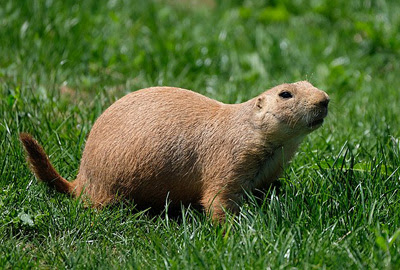
Plague and the Prairie Dogs

Populations of animals are not always stable from year to year, even ignoring the effects of direct human activity or climate change. If there is a prolonged drought, plants may die off, reducing the population of herbivores, which, in turn, reduces the number of predators that feed on them. This much is part of the natural cycle of life and death.

Perhaps the most famous example, sufficiently so to turn up in some school textbooks, is the case of the Canada lynx. This eats almost nothing but showshoe hares, so when the supply of the hares runs low, the lynx are more likely to be malnourished, so that mothers give birth to smaller litters. This means that there are fewer lynx around, which leads to the snowshoe hare booming, which means more food for the lynx, so they have larger litters, their population increases, they eat the hares so that the hare population goes down... and so on. Because the effect works through the litter size of the lynx, which take time to reach maturity, the lynx population rises and falls about a year behind that of the hares, and the entire cycle takes a decade or so to come full circle. We have records of this going back to the early 19th century from the fur-trappers of the Hudson Bay Company, and it doubtless goes back well into prehistory.

Sunday, 1 May 2022

Bats in the Megafire

A little over ten years ago, I wrote on this blog about the effect of forest fires on bats in Florida. It turned out that the bats in question, which were big brown bats (Eptesicus fuscus), one of the most common bat species in the US, were actually quite happy when forest fires tore through the sandhills where they lived. This is because it improved their environment, in particular making it easier to fly about through what might otherwise be a mass of tangled vegetation and thick undergrowth. 

That was a decade ago, and further studies since that date have broadly confirmed the findings of the one I was referring to in that post. A 2019 study, for example, showed that the same was true for a number of species in Australia. Overall, it seems that, at worst, forest fires have no overall effect on bat populations and, in general, they're actually a benefit.

Sunday, 31 October 2021

Flesh-eating Bats

Greater noctule bat
(Well, it is Halloween...)

At least in the parts of the world with a temperate climate, the great majority of bat species are insectivorous. Of course, there are a number of vegetarian bats, especially in the tropics, including the large fruit bats of the Old World as well as smaller, often fig-eating, species in the Americas. But insect-eating does seem the default, even though there is general agreement these days that bats are more closely related to the larger carnivores and to the hoofed mammals than they are to the other small insectivores, such as shrews and hedgehogs.

From an ecological, trophic web, perspective, insectivores are a type of carnivore - after all, they eat other animals, even if they're small ones. But, when talking about mammals (and similarly sized vertebrates) most researchers tend to draw a distinction between those that hunt invertebrate prey and those that eat comparatively large vertebrates. So there's a distinction between leopards and killer whales on the one hand, and shrews and anteaters on the other.

Sunday, 15 August 2021

Of Pandas and Bamboo

Today, there are eight living species of bear. Six of these are "ursine bears", members of a subfamily distributed across the northern hemisphere, and including the familiar brown, black, and polar bears, among others. The other two are distinct enough that modern taxonomists place each of them in their own subfamily, representing lineages that diverged from the common ancestor of the ursine bears a long time ago. One of these is the spectacled bear of South America, the last survivor of a group of American "short-faced" bears, some of which were really quite impressive.

The other, of course, is the giant panda (Ailuropoda melanoleuca).

This is a most peculiar bear. So much so, in fact, that for much of the 20th century it was unclear whether it really was a bear at all - a misunderstanding due to its similarity, and presumed close relationship to, the decidedly un-bearlike red panda. However, we now know that the two animals are not particularly close relatives and the resemblances between them are largely due to the fact that they share a similar diet.

Sunday, 3 November 2019

Bat Poo and Fig Trees

Seba's short-tailed bat (Carollia perspicillata)
feeding on wild pepper
If the presence of plenty of carnivores is generally bad news for herbivores, it may seem that the presence of plenty of herbivores is bad news for plants. Clearly, such problems as over-grazing do exist, but the reality can often be more complex. Fruit are a particular case in point.

Many fruits are tasty specifically to encourage herbivores to eat them, containing highly resistant seeds that pass through the herbivore's digestive tract, land in a nice pile of manure, and germinate to create more plants in future. It has been estimated that, in most wild forest environments, anything from 45% to 90% of tree species bear edible fruit of this kind. (Of course, a number of the fruits we see in supermarkets are even tastier, because we've bred them that way, with the banana being perhaps the most extreme example. But it's not as if wild apples and oranges, for example, don't exist and aren't attractive to animals).

Not all herbivores eat these kinds of fruit, as opposed to other things that botanists would call "fruit", such as grass seeds. Primates are one of the more obvious examples of mammals that do, and it's theorised that our unusually good colour vision arose in part so that we could easily tell which ones were ripe. But another group of mammals that eat a strongly fruit-based diet are, unsurprisingly, the fruit bats.

Sunday, 13 October 2019

The Curiosity of Lemmings

The reason that there are so many different animal species in the world is that they all have different living requirements; it's no secret that a tiger has different needs from a hedgehog. In most land-based habitats, we can look around and see a fair variety of mammal species and it's obvious that, while they may compete in other ways (by eating each other, for example), they can all survive because they are using their chosen habitat in different ways.

But, in some cases, it's quite hard to find more than a handful of species - especially if we're going to restrict ourselves to mammals, and ignore all the birds, insects, and so on. This is often true of city centres, for example, where you may not have much aside from rats, mice, and urban foxes. But in the wild, however, we are typically talking about particularly marginal habitats, such as deserts, high mountains and other desolate wastes.