Sunday, 20 March 2016

CSI Atlantic Ocean

Lungworm in a Guiana dolphin (H&E)
Here in the UK, there have been a number of news stories about whale strandings over the past couple of months. A number of sperm whales wandered into the relatively shallow waters of the North Sea, which they do not normally visit, and became stranded at locations near Skegness in Lincolnshire and Hunstanton in Norfolk. A similar number stranded along the coast of Germany, and a few in the Netherlands and France. Unable to support their own bulk out of the water, they died of suffocation and cardiovascular collapse.

These sort of strandings are fortunately as rare as they are dramatic - part of the newsworthiness in this case was so many happened in such a short time. Fortunately, the great majority of cetacean "strandings" aren't like this at all. In most cases, the cetaceans are already dead, or nearly so, by the time they wash up. Furthermore, most of them are dolphins, simply because there are more dolphins than whales in the world, and they are also more likely to be swimming in coastal waters in the first place.

After all, every dolphin dies eventually, and the body has to go somewhere. Often, they sink, leading to the spectacular scavenger feeding frenzy of "whale fall" when a vast and blubbery carcass sinks into the depths of the deep ocean. But, especially if they happen to die close to the coast, there's every chance that the body will float for long enough to eventually wash up somewhere. It happens every now and then to humans washed overboard from ships, so, when you think about it, it's unsurprising that it happens to at least some dolphins, too.

Sunday, 13 March 2016

The Size of Dead Rodents

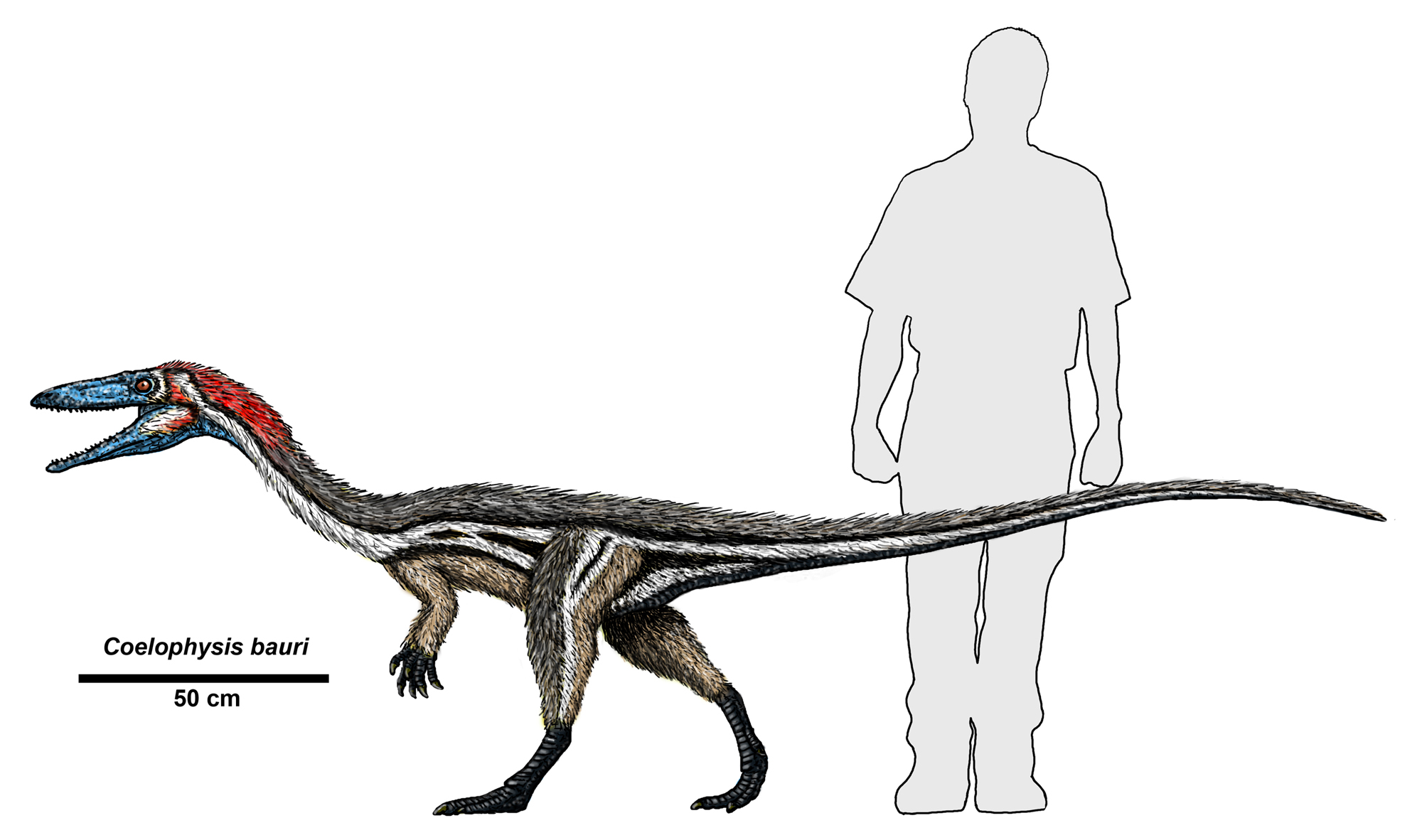
When it comes to fossil animals, there is an undeniable fascination for the largest and most dramatic of species. It's part of why dinosaurs are so much more popular in the public mind than fossil mammals. Even among dinosaurs, while creatures such as Coelophysis have their fans, there are surely many more people who would name the likes of Tyrannosaurus, Brontosaurus, or Triceratops as their "favourite dinosaur". When it comes to fossil mammals, it's the mammoths and the sabretooth cats that hold the public imagination, and we also like to hear of giant bears or mighty prehistoric rhinos.

There's nothing wrong with that, and I'd have to confess to that bias myself. (I mean, come on, who doesn't love sabretooths?) Indeed, it seems that for much of Earth's history, the largest land animals were indeed larger than their counterparts today. But, at any given point in time, the small animals always outnumber the large ones. Today, over two thirds of known mammal species are either rodents, bats, moles, or shrews, and, while the details might have changed, it seems plausible that the majority of mammals in the past were at least roughly in that size range.

Sunday, 6 March 2016

Stressed Out Squirrels

Southern flying squirrel
Stress is, it seems, an inevitable part of life. You just can't get away from it altogether, and that applies to animals as much as it does to humans. True, they tend to get stressed out about different things, not being able to ponder the future, although it's surely true that if we were about to be attacked by, say, a man-eating tiger, we'd probably find that as stressful as mice find the presence of cats.

In fact, stress is such an integral part of life that, at a biological level, it works in more or less the same way in all vertebrates. Stress results in the release of stress hormones, of which the most important is cortisol. In mammals, this is produced in the adrenal cortex, the outer part of the adrenal glands, which sit on top of the kidneys, and produce a whole range of different hormones of which cortisol is only one. So basic is this that all non-fish vertebrates have adrenal glands of some sort, although which bits of them make the cortisol (and, in some cases, how many there are) does vary between different groups. Even fish, which usually don't have adrenal glands as such, do have the relevant sorts of tissue somewhere in the general vicinity of the kidneys, so that they too can make cortisol. It really is that universal.

Sunday, 28 February 2016

Bovines: How Cows Were Domesticated

Taurine bull
Cattle (Bos taurus) are among the most familiar of herbivorous domestic animals. According to recent estimates, there are well over a billion of them on the planet today, found almost anywhere that humans practice agriculture. In the west, we are familiar with them as a source of beef or milk, but, in many parts of the world, they are still used primarily as draft animals ("oxen"). Indeed, they are important enough that Christopher Columbus first brought them to America in 1493, on only his second voyage to the New World.

But one unusual thing about cattle is that there is no living wild form of the animal. There are still wolves and wildcats, wild goats, wild sheep, and wild boars... but there are no wild cattle. They're not unique in this respect, to be sure, and there are a few populations of feral cattle around the world (that is animals living in the wild whose ancestors were domesticated), but it's a fairly exclusive club nonetheless. And, obviously, it wasn't always the case.

Sunday, 21 February 2016

Pliocene (Pt 9): Coyotes, Cats, and Spectacled Bears

A modern spectacled bear
When it comes to the extinct mammalian predators of North America, few are more famous than the sabretooth cat Smilodon, with the dire wolf likely coming a close second. But both of these animals lived during the Ice Ages, and, of course, with all those tasty horses, deer, and so forth wandering the steppe-lands of Pliocene North America, there were plenty of carnivores there before the Ice Ages began. Indeed, scary though Smilodon undoubtedly was, unless you're the kind of person that enjoys wrestling hungry tigers in the modern world, many of these others were probably quite dangerous enough.

But not, it has to be said, all of them - at least, from a human perspective. There were, as you might expect, many small carnivores in North America at the time, including badgers, weasels, skunks, raccoons and early wolverines and otters. While we can't know the details of their coat colours, it's quite likely that many of these creatures would have looked not too different from their modern relatives and possibly would have been hard to tell apart from them on casual inspection.

Sunday, 14 February 2016

March of the Beavers

When most people think of "rodents", they most likely think of rats or mice. This is fair enough, as the great majority of rodent species pretty much fit that description. But there are, of course, many others. Voles, hamsters, gerbils, and so on are probably fairly obvious, and somebody once asked me if squirrels were "members of the vermin family", by which I assume they meant "rodents" - which they certainly are. One suspects, however, that beavers might come fairly low on most people's list.

Having said which, it's probably not so surprising when you think about it. They do, after all, have huge gnawing teeth that look like those of rats (and which, indeed, help define the rodents as a group). Granted, they are pretty enormous as rodents go, and bulky with flat, paddle-shaped tails, but rodents they are, with animals like gophers and kangaroo rats among their closest relatives.

The beaver family, ignoring the extinct forms, contains a grand total of two species, both of which are found in Europe. One of them is the animal familiar to Americans (Castor canadensis). Descended from a population that originally lived in Wyoming and Canada, these were shipped across to Finland in 1937, and subsequently spread across the country, crossing the eastern border into Russia in 1952. A year later, some of them were moved again, this time to Austria, and in the 1970s, some were shipped all the way to eastern Siberia. All of these populations survive, although attempts to introduce the animals to France, Ukraine, and Belarus all ultimately failed.

Sunday, 7 February 2016

Sea Lion Bachelor Pads

Spot the male
As I mentioned just a few weeks ago, male mammals are generally larger than female ones, although there are some notable exceptions. This is particularly the case where males have to compete for access to females, and there are few cases where this is more obvious than among seals and sea lions.

Sea lions and "true" (or "earless") seals belong to different, if closely related, families, but their reproductive strategy is much the same. In both cases, they spend most of their lives at seal, but they can't give birth there without their pups drowning. The majority of species breed once every year, with the females coming ashore, first to give birth, and then, almost immediately after, to get pregnant again before returning to the sea.

The precise details vary from species to species, but the South American sea lion (Otaria flavescens *) is a typical example. In December each year (that is to say, in early summer, this being the Southern Hemisphere), males haul themselves out onto beaches and fight one another for the best spots. Naturally, the largest and most aggressive males win, with the smaller and younger individuals forced out, to either wait another year, or to make daring raids when the larger ones aren't looking.