Showing posts with label size. Show all posts

Sunday, 24 July 2022

How Big is a Small Whale?

The ongoing expansion of humanity has placed several animal species under threat of population decline or extinction, whether due to direct effects such as loss of wild spaces or more indirect ones such as climate change. (And a great many of these species are non-mammalian, of course, despite the focus of this blog). On the other hand, there have also been many conservation efforts that aim to restore, or at least preserve, species at risk. As I've previously described, for example, both black-footed ferrets and European bison went completely extinct in the wild during the 20th century, but are now back living in their original native habitats, if only in small numbers.

Not all such restoration efforts have been successful, and there can be many different reasons for this, not all of which are necessarily biological. Better then, of course, to try and prevent species from becoming endangered in the first place. For this reason, many species are protected even if they are not currently at risk. The more we can understand about these species, the better we will be able to keep them that way. 

Saturday, 28 March 2020

Giant Ostriches of Europe

This post will be current as of 1st April, and that means it's time once again for... Diapsida!

The largest species of birds alive today are the ostriches. Since 2014, we have recognised two species of ostrich, but, as the fact it took us that long to notice might imply, they're about the same size, so which is actually "the largest" is debatable, although the common ostrich (Struthio camelus) tends to be the one given the honour.

Under the system of classification used throughout the 20th century, ostriches are a kind of ratite, a group of flightless birds, most of which are large, long-legged and long-necked, and all of which lack the keel on their breastbone to which the flight muscles would be anchored in other birds. In 2010, the first evidence surfaced that the ratites were not a natural evolutionary group, when it turned out that the South American tinamous formed a branch within the "ratite" family tree. Since tinamous can fly (albeit not very well) and, more importantly, do have a keel, they aren't ratites themselves, so the old terminology had to be dumped.

Sunday, 15 March 2020

The Smallest Mammal Ever?

When it comes to fossil mammals, or indeed, any other kind of fossil animal, our attention is inevitably drawn to the giants. We are often fascinated by the mammoths or glyptodonts or the largest of Irish elk or the most muscular of sabretooths. Outside of mammals, it seems there's a never-ending battle to find the "largest dinosaur ever".

Indeed, one might almost get the impression that everything prehistoric was larger than today. In a number of cases, that's because larger animals really did exist in the past, perhaps being wiped out by a combination of the harsh realities of the Ice Ages and the arrival of human hunters. It's also an artefact of larger bones being easier to find in rock layers and being less fragile and likely to fragment when they fossilise. And that's before we add in the fact that most popular books on the subject tend to have a focus on the biggest and most dramatic animals of their kind.

Sunday, 12 May 2019

The Big African Not-a-Lion

Spot the real lion
When it comes to fossil animals, there can be little doubt that the ones most popular with the general public are the large ones. There's a reason that dinosaurs seem to hold the most enduring fascination, and that even popular science books about the whole range of prehistoric life are almost bound to have them as part of their title. (And, while some dinosaurs were small, most of the ones we know about weren't, perhaps partly because it's easier to preserve large solid bones than small fragile ones).

It's not really any different with prehistoric mammals, with mammoths, mastodons, and sabretooth cats being the ones that most people would instantly recognise and be familiar with. Even dire wolves, which weren't really all that big, are surely better known than, say, extinct foxes or weasels of the same age. Which brings up a second point: even if an animal isn't as large as an elephant or Diplodocus, being unusually large for a carnivore will still help its public profile enormously.

Saturday, 1 April 2017

Deadly Demon Ducks of Doom

Since today is 1st April, although I'm not doing a spoof post, I am taking my annual break from mammals to talk about birds. Specifically demon ducks, although I nearly went with flightless boobies. It's that sort of day.

Australia is the most isolated continent to possess native mammals, so perhaps it shouldn't be surprising that the mammals that live there are particularly unusual, often only distantly related to those elsewhere. Birds, however, have an advantage that most mammals don't, in that they can fly long distances between land masses without dying. (They may not be doing so deliberately, of course, but being blown off course in a storm is the sort of risk they have to put up with). It's notable, in fact, that one of the two groups of native placental mammals in Australia are the bats, which are also also found further out in the Pacific islands.

Anyway, the upshot of this is that the birds of Australia frequently fall into taxonomic groups familiar from elsewhere in the world; Australia has owls, doves, seagulls, and parrots, among many others. At the same time, however, it is isolated enough that it does include some unique kinds of bird that are not found on other continents - less than the number of unique mammal groups, to be sure, but a number nonetheless. For example, lyrebirds are endemic to Australia, and are considered to form the oldest living branch of the songbird family tree.

Sunday, 13 March 2016

The Size of Dead Rodents

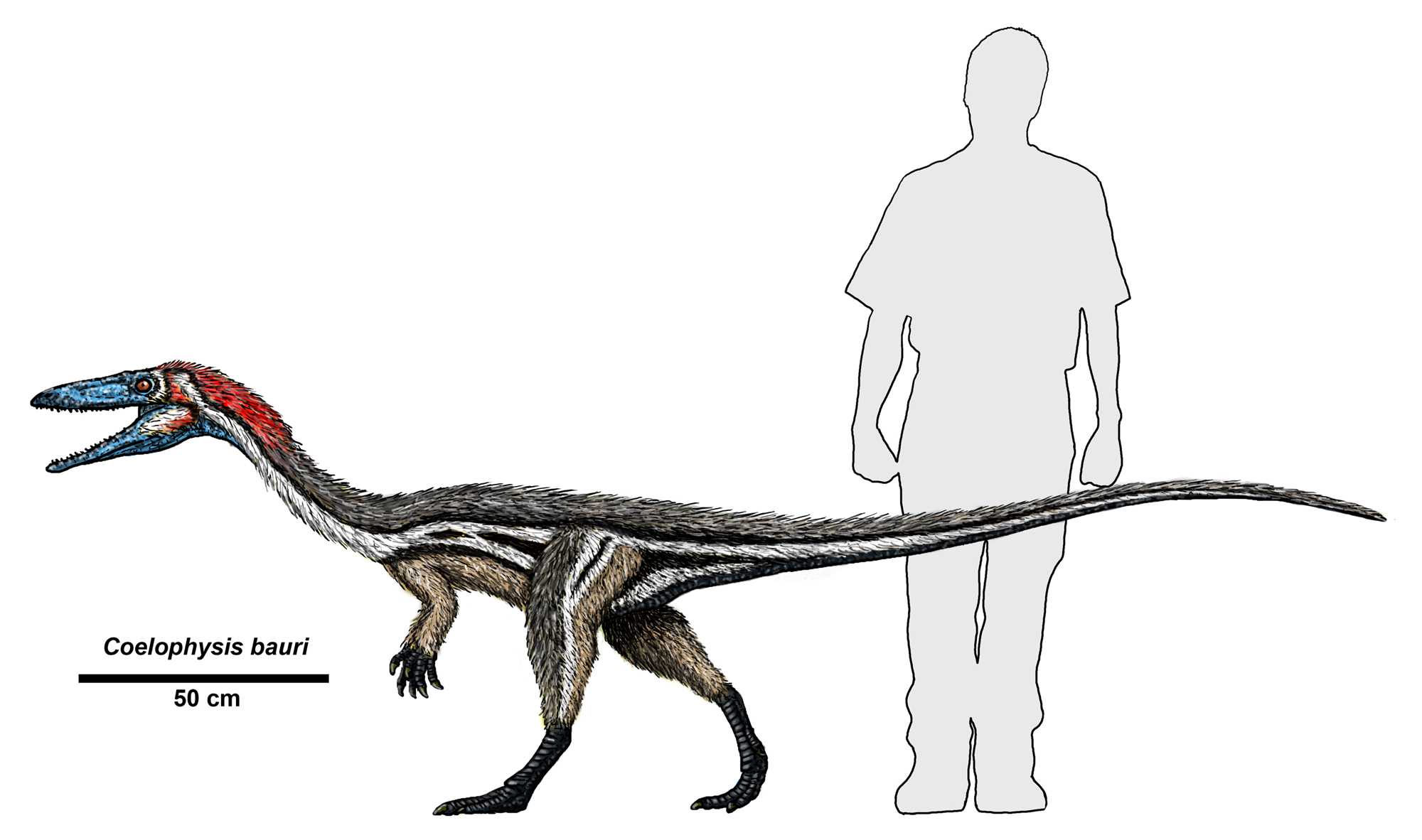
When it comes to fossil animals, there is an undeniable fascination for the largest and most dramatic of species. It's part of why dinosaurs are so much more popular in the public mind than fossil mammals. Even among dinosaurs, while creatures such as Coelophysis have their fans, there are surely many more people who would name the likes of Tyrannosaurus, Brontosaurus, or Triceratops as their "favourite dinosaur". When it comes to fossil mammals, it's the mammoths and the sabretooth cats that hold the public imagination, and we also like to hear of giant bears or mighty prehistoric rhinos.

There's nothing wrong with that, and I'd have to confess to that bias myself. (I mean, come on, who doesn't love sabretooths?) Indeed, it seems that for much of Earth's history, the largest land animals were indeed larger than their counterparts today. But, at any given point in time, the small animals always outnumber the large ones. Today, over two thirds of known mammal species are either rodents, bats, moles, or shrews, and, while the details might have changed, it seems plausible that the majority of mammals in the past were at least roughly in that size range.

Sunday, 5 January 2014

How Long to Make an Elephant?

Biology, on the whole, is not a great one for following mathematical laws. Physics has no such problem, and is replete with mathematical formulae for calculating this and that, which never fail, so long as you've understood them properly. Biology, not so much. It's squishy, and variable, and while it does follow rules at least some of the time, there are so many confounding factors that they're really more like guidelines. (Barring, of course, those imposed directly by physics, such as the minimum wing area needed to get airbourne).

Still, it does have some, and a lot of them are to do with the mass of an organism. We can say, for instance, just to pick an obvious example, that a bigger animal needs to eat more food. Or, more accurately, more calories, since otherwise you get into all sorts of difficulties depending on how nutritious their diet happens to be.

It's not simply a matter of twice the mass, twice the calories, either, because there are economies of scale here. Talking about mammals, as we do here, these economies have a lot to do with heat loss. A bigger animal retains more heat than a smaller one, and, since mammals are warm-blooded, that means a bigger animal doesn't need to work quite so hard to keep that body temperature at the right level.

Sunday, 29 April 2012

Does Colder Mean Bigger?

Amne Machin, Qinghai
In 1847, German biologist Christian Bergmann formulated what has since become known as Bergmann's Rule. Over the following 165 years, the Rule has been somewhat modified and re-interpreted from Bergmann's original statement, but a common modern version is that warm-blooded animals tend to be larger the colder the environment they live in. Bergmann was originally thinking of closely related species; for example, polar bears tend to be larger than most brown bears. However, the rule is now often applied to individuals and populations within species; for instance, Siberian tigers are larger than those that live in the tropics.

The rule has, as I've noted before, been the focus of some controversy. Is it, in other words, actually true? Certainly, there are many counter-examples - snow leopards are the smallest cats in their genus, for example. But are these rare exceptions to a general rule?

Sunday, 15 May 2011

When Sloths Roamed the Grasslands

The Altiplano - where ground sloths may once have grazed
I've mentioned before that the living tree sloths are the last remnant of a much larger group of ground-living animals. These animals originated in South America during the long time that that continent was an island, connected only to Antarctica. Eventually, the land mass collided with North America, bringing with at an array of more modern mammals, such as foxes, deer, and cats, as well as a few that have died out elsewhere since, like tapirs and llama.

The ground sloths actually did reasonably well after the other mammals arrived, and a very wide array of fossil species are known, the last of them having died out as recently as 9000 BC. Indeed, they crossed Central America heading in the other direction, leaving fossils in the northern continent, and at least one species, Megalonyx, even crossed the Arctic Circle to live in the cold wastelands of northern Canada. Many inhabited forests, but others preferred grasslands, or even semi-desert, while Thalassocnus may have been semi-aquatic. There was also a huge range of different sizes, from some that were barely larger than modern tree sloths, up to the multi-ton Megatherium.