Showing posts with label Sabretooth. Show all posts

Sunday, 14 December 2025

Prehistoric Mammal Discoveries 2025

Computer reconstruction of the skeleton of the Miocene
 right whale Megabalaena, published this year
As another year draws to a close, it's time to take another dash through the mammalian palaeontological findings of the last twelve months. As always, this will be a rapid survey of some discoveries that I find particularly interesting without any detailed discussion, but hopefully covering as wide a range of prehistoric mammals as I can.

Large Herbivores

Land mammals don't come much larger than mammoths, and such animals, and their mastodon relatives, have shaped the world around them through their mere presence and the food they chose to eat. A study on southern mammoths (Mammuthus meridionalis) uncovered at a million-year-old site in northern Spain showed that the climate at the time was already Mediterranean, a warm gap within the Ice Ages, causing them to feed more on grasslands than trees. While hyenas had fed on some of the carcasses, they were not alone, as the evidence also shows clear signs of butchering with stone tools.

Elsewhere, a new study found that the South American gomphothere, Notiomastodon, which had entered the continent when the Panama Land Bridge formed, had a diet rich in fruit. When they went extinct as the climate warmed 10,000 years ago, their disappearance spelt trouble for the plants with large, fleshy fruit that had relied on them for seed dispersal.

But if Spain had a reasonably modern Mediterranean climate one million years ago, that obviously didn't last. Although we know they must have existed earlier, until this year, the oldest known cold-adapted mammals from Spain dated to no more 190,000 years ago, during the second-to-last Ice Age. This year, however, a reindeer tooth was described from the country that could date back as far as 300,000 years, during the Ice Age prior to that - it's the most southerly known reindeer fossil ever discovered. 

On the subject of deer, a new analysis of the DNA of the Toronto Subway deer (Torontoceros hypogaeus) discovered during the construction of the eponymous transport system suggested that, while undeniably a distinct species, it might be more closely related to the living white-tailed deer than previously thought. It lived in open habitats, and was driven to extinction at least partly by the spread of the forests that now cover the area.

Studies of isotope ratios in the short-legged hippo-shaped rhinceros Teleoceras from Nebraska showed that they lived in much in the same areas throughout their lives, not migrating, or even moving as far as we would expect when they reached adulthood and left their parents. This may have been because they relied on habitats with plenty of water to wallow in, and they just couldn't find them elsewhere. Over in eastern Siberia, the longest ever fossilised horn from a woolly rhino (Coelodonta antiquitatis) was described; it was over 164 cm (65 inches) long, far larger than those of any living rhino.

Fossils are not necessarily of things like bones and horns, however. This year, the oldest known fossilised cowpat was described from 20 million-year-old deposits, also in Nebraska. At least it looks like a cowpat - it's about the right size and shape, and it's obviously dung - but cows didn't exist that far back, and, honestly, neither did anything closely related to them. So, probably a ruminant of some sort, but what kind will likely always remain a mystery.

Carnivores

Europe is devoid of big cats today, unless you count the occasional lynx. This was not always so, however, and a publication this year expanded the range of the European jaguar (Panthera gombazagoensis) to Poland and to Suffolk in England between 700,000 and 350,000 years ago. Another large cat, the famous sabretooth Smilodon fatalis, was discovered further south than ever before - in Uruguay

We already knew about leopards (the modern species) in the Pyrenees during the Ice Ages, but their fossils are rare. A new study of their overall distribution and history showed that they became steadily larger as the Pleistocene wore on, and also that males and females were more similar in size than in living members of their species. Moreover, they showed a preference for mountainous habitats, and their body shape shifted towards that of modern snow leopards prior to their local extinction.

The largest mammalian carnivore during the Ice Ages in North America was the giant short-faced bear (Arctodus simus), with some individuals estimated to have weighed up to 950 kg (2,000 lbs). However, some fossils were significantly smaller than this and had been suggested to represent a distinct subspecies. Genetic analysis this year was unable to find any significant differences between the larger and smaller specimens except for one: all the large ones were male, and the small ones female...

And, well, yes, I should probably mention this, since it was all over the news. This year, a company claimed to have returned the dire wolf (Aenocyon dirus) from extinction, in the form of three, rather cute, white puppies. Almost nobody outside the company with any expertise agrees that this is really what they have done, simply adding a few dire wolf-like genes to what are rather obviously grey wolves.

Cetaceans are also carnivores, although descended from creatures that were not. An analysis of the skull of the very primitive dolphin-sized Protocetus showed that it had already developed the large brain that cetaceans are known for today but, more importantly, that it still had a keen sense of smell. Modern whales and dolphins have no use for smell but Protocetus likely spent at least some of its time on land, giving it a very different lifestyle.

Among more recognisable whales, Idiophorus is either the most primitive known sperm whale or a close relative of their last common ancestor. Recovered from Miocene age deposits in Patagonia, it had a long snout shaped like a wine bottle (so hardly like a modern sperm whale) and was around 6.6 metres (22 feet) in length. The key fossil was thoroughly re-examined this year for the first time since it was uncovered in the 19th century, revealing that it was a deadly predator feeding on relatively large vertebrate prey, unlike other known sperm whale species living in the area at the time. 

At the other end of the Americas, and a few million years earlier, Fucaia was a Canadian whale belonging to a now-extinct group. Analysis of a well-preserved fossil this year showed that, like Idiophorus, it was an agile and active predator, although, partly because it was rather smaller, its hunting style was probably most like that of a modern sea lion. Despite this, its closest living relatives include the toothless krill-feeding baleen whales.

Other Placentals

Glyptodonts were gigantic relatives of armadillos, their heavy armour plating making them the mammalian equivalent of tanks. A study this year provided the first analysis of damage to that armour in three South American species, adding to those already performed on more common ones. It also confirmed that, like certain dinosaurs, they likely did wallop each other with the clubs on their tails, likely while competing for mates or territory.

Ground sloths have a long evolutionary history, much larger relatives of the small(ish) tree-dwelling animals that are their only remaining close relatives. A new analysis shows how they gradually increased in size as the climate shifted, but that, probably to the surprise of few people, it was not climate change that eventually drove them to extinction, but the arrival of humans. 

Look at any reconstruction of a ground sloth, and it will inevitably show a large, somewhat shaggy animal. But it had been argued that, like elephants and rhinos, the largest ground sloths may not have had much fur at all, being so big that they did not lose much body heat anyway. It was a minority view, but geochemical analyses and simulations published this year seem to put the nail in its coffin. Given the relatively cool environments in which they lived, the simulations suggest that even the largest species would have needed a pelt of fur 10mm (0.4 inches) thick, and some would have needed fur three to five times that long. This, despite the fact that palaeothermometric analysis in the same study showed that they had unusually low body temperatures for their size.

Several studies this year took a look at the development of increasing brain size during primate evolution - primarily monkeys and apes. They did not all come to the same conclusions, which, while they don't necessarily contradict one another, either, suggests that there was probably a lot going on rather than one single answer. One study pinpoints visual processing as the main factor, with visual parts of the brain becoming disproportionately large before the rest caught up, something that would make sense for an animal that had to navigate through tree branches.

Another points to socialisation, with parts of the brain responsible for some of our most complex behaviour starting to enlarge early on. A third points out that brain enlargement correlates, to some extent, with the elongation of our thumbs (which are obviously very different from those of most non-primates), implying that fine manipulation of objects may have been another key element in the drive for greater intelligence.

Going further back in time, another study this year challenged the traditional view of primates originating in tropical jungles. Instead, it suggests that the very first primates appeared in cold and temperate habitats in the north, the changeable climates of such areas promoting the evolution and dispersal that allowed them to reach the tropics later on.

Among the rodents, analysis of a new fossil and comparison to others already known shed light on the origins of the group that includes the gophers. The fossil belongs to an unusually large relative of the ancestor of gophers and kangaroo rats, and seems to have already been a skilled digger. This supports existing theories that the ancestral gopher looked like, and had a similar lifestyle to, today's pocket mice.

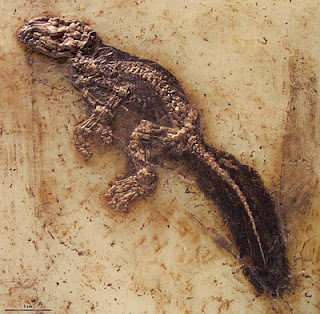
An unusually complete fossil free-tailed bat found north of Marseilles in France dates back over 30 million years to the Early Oligocene. The shape of the wings and muscular anchors in the body shows that it was fast and capable of sustained flight, probably catching insects in the air as it flew over what was then a large lake.

Conoryctes was a medium-sized burrowing mammal living in North America just 3 million years after the extinction of the non-avian dinosaurs. It's probably a placental mammal, but it has been argued that it may actually be an early relative that's simply closer to true placentals than to marsupials. A study of the microscopic structure of its bones shows that it must have grown rapidly, reaching adult body size in a single year and that it would have been weaned at about the age we would expect for a true placental of its size. So even if, by some chance, it wasn't literally a placental mammal, it lived very much like one.

Marsupials and More

The best-known and distinctive marsupial species are probably the kangaroos and wallabies. All but one living species belong to a subfamily that spread through Australia starting around 11 million years ago. The oldest known fossil belonging to this subfamily belongs to Dorcopsoides, which may hold some clues as to why the group became so succesful on their home continent. A new analysis published this year found that it was a more efficient hopper than had previously been thought, suggesting that it was already adapted to open environments, something that was just starting to become more common at the time, as the Australian outback began to dry out. 

It may have helped that, as another new analysis of the wear patterns on their teeth showed, Ice Age kangaroos had a wider diet than was apparent from their anatomy alone. On the downside, if they were adaptable, the fact that so many kangaroo species went extinct around 40,000 years ago is probably not primarily due to the change towards a colder climate...

While fairly detailed DNA analysis is possible for mammoths and other Ice Age animals preserved in permafrost, it is much harder for animals of similar age in warmer climates. A new study this year therefore used the molecular structure of collagen from sinews and other tissue to confirm the relationships between some of the marsupials that went extinct in the last 100,000 years. Perhaps the most significant finding was that the closest living relative of the extinct carnivorous marsupial lion Thylacoleo may be the koala, rather than it being an earlier relative of the koala-wombat common ancestor.

On the subject of carnivorous marsupials, these were at least as prominent in South America in prehistoric times, dominated in particular by the large sparassodonts. A new analysis of the skulls of South American marsupials this year showed that, while most had similarly shaped (elongated) brains to modern marsupials, that of the sabretooth marsupial Thylacosmilus was more rounded, due to its shorter, cat-like face. More significantly, revised estimates of its body weight showed that its brain was smaller than previously thought, in the range of some of its earliest ancestors, its size having evolved less than expected.

Similar analysis of an armbone belonging to the mysterious mammal Kryorectes confirmed that it was, as previously thought, a monotreme. Living alongside Australian dinosaurs a whopping 106 million years ago - 40% further back in time than Tyrannosaurus rex - the study also showed that it was probably a semiaquatic burrowing animal. The platypus lifestyle may be truly ancient. 

Finally, the multituberculates were neither placental, marsupial, nor monotreme but a fourth grouping that survived well into the Age of Mammals. An analysis this year of their habitats and distribution across North America suggested that, at least on that continent, they were restricted to damp temperate forests dominated by redwoods and swamp cypress and that they finally disappeared when those forests dramatically declined as the world cooled at the end of the Eocene. This contradicts the popular theory that it was competition with newly arrived rodents that killed them off, since they were apparently living elsewhere at the time.


Synapsida is taking a break for the holiday period and will return on the 4th January

[Image from Yanaka et al. 2025, available under CC-BY-4.0]

Sunday, 15 December 2024

Prehistoric Mammal Discoveries 2024

Zalamdalestes
I have reached the end of another year and that means it's time for what has become a tradition on this blog over the last eight years: a look back at some of the discoveries about fossil mammals made in 2024 that didn't make into the regular posts. As usual, this will be a quick whistle-stop tour of mammalian palaeontology, hopefully focusing on some of the more interesting findings. Like any field of science, it has not been standing still.

Large Herbivores

Woolly mammoths (Mammuthus primigenius) are among the best-known of all prehistorical mammals to the general public and, aided by the fact that some lived recently enough to be preserved in permafrost, they are also amongst the best-studied. But there is still more to learn about the details of their lives and habits. A study published this year looked at the detailed isotopic composition of a fossil mammoth that had died about 12,000 BC in Alaska, showing that she was female, and had migrated over 1000 km (600 miles) during her lifetime, having originally been born in the Yukon. The area in which she died was popular with mammoths, but also with humans - she may have died peacefully, but the presence of people where mammoths congregated may not be a coincidence.

Sunday, 17 December 2023

Prehistoric Mammal Discoveries 2023

Potamotherium
It's the last post of the year for 2023, and that means it's time once again to take a brief look at discoveries from the last year in the world of fossil mammals that didn't make it into this blog. Because, while dinosaurs are undoubtedly popular, the study of prehistoric mammals is also a major field, aided by that, being (mostly) relatively recent they tend to be more numerous and better preserved. Of course, everyone's heard of woolly mammoths and sabretooth cats but there's plenty more out there and, if I'm going to zip through them at speed today, I'm also going to try and cover as wide a range as possible. So, let's get going...

Sunday, 18 December 2022

Prehistoric Mammal Discoveries 2022

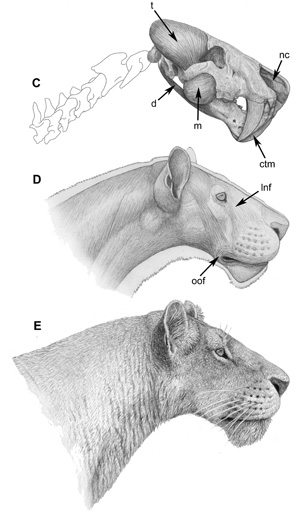
New reconstruction of the sabretooth cat
Homotherium, showing that the teeth
would not have been as visible as popularly
supposed
2022 approaches its conclusion and I have to say that, while far from perfect, it was an improvement on the previous two years. There were a couple of weeks without posts this year, one for positive reasons, and one less so, but overall it has been good. Next year, you can look forward to something other than monkeys in my "family" series of posts and also to the conclusion of the long-running Miocene series, which should be as early as February. Until then, here is the now-traditional year-end look back at the paleontological discoveries that didn't quite make it into the blog.

Large Herbivores

Probably the most distinctive thing about deer is that the males have antlers; branching bony head ornaments that are shed and regrown each year. This naturally raises the question of how this evolved, since no other animal has quite the same thing. Acteocemas was an Early Miocene deer, but despite living very early in the group's evolutionary history, it already had antlers that split into two near the tip - which the horns of animals such as cows and true antelopes never do. A Spanish fossil of the antlers described earlier this year showed that it was already shed and regrown, but microscopic analysis indicated that it appeared to have been present for over a year, suggesting longer a more irregular pattern of shedding that must have changed to the seasonal pattern we are familiar with more recently, perhaps in the Middle Miocene.

Sunday, 12 June 2022

Miocene (Pt 33): Killer Armadillos and Far-travelling Raccoons

Lycopsis
As the Miocene epoch drew towards its conclusion, the island continent of South America drew steadily closer to its northern counterpart. The gap would not be fully bridged by land until a few million years later at the end of the following, Pliocene, epoch but, when it did, many of the peculiar mammals of the southern continent would die out, albeit in many cases it was the subsequent Ice Ages and/or the arrival of humans that truly finished them off. One group that survived the experience, and that is still around today, is that of the armadillos.

Even so, armadillos were more diverse in the Late Miocene than they are today. Probably the most distinctive were the glyptodonts, which had solid, often domed, shells without the flexible bands seen in living armadillos. As the sweltering heat of the Middle Miocene faded towards temperatures closer to those we see today, grasslands began to extend across much of the southern part of the continent, and the glyptodonts adapted to it, switching towards an even more heavily grass-based diet than before. The resulting group of what we might loosely call "advanced glyptodonts" was the one that would later briefly cross over into the north and includes the most famous examples. In addition to certain features of their shell, they were distinguished by having teeth especially suited for chewing, with the high crowns suitable for grinding up grass and other tough vegetation.

Sunday, 19 December 2021

Prehistoric Mammal Discoveries 2021

Lesmesodon, a weasel-sized hyenadont.
A new species from Early Eocene France was
 described this year
And so another year approaches its conclusion and the pandemic seemingly isn't done with us yet. I had to self-isolate after a positive test myself for a couple of weeks (no symptoms, though) but if there's one thing that doesn't interrupt, it's blogging, so everything went smoothly here. But now it's time for what's becoming a traditional look at the paleontological discoveries of the past year that didn't get covered here but are worthy of at least a brief mention.

Large Herbivores

When we think of vertebrate fossils, the first thing that pops to mind is almost certainly going to be a skeleton of some kind, or perhaps just part of one. But there are also such things as ichnofossils - fossilised remains of how an animal affected its environment that no longer include any physical part of the animal itself. Perhaps the most obvious of these are fossil trackways - footprints of long-gone animals preserved in mud or other soft material that has since turned to stone. A study published this year examined the tracks left by two species of fossil horse. One of them, a one-toed close relative of the living species inhabiting southern Canada during the Ice Ages, turned out to have been galloping at around 34 kph (21 mph), which is quite fast for its small size (perhaps it was running from something). More significantly, however, the three-toed Miocene horse Scaphohippus was using a relatively unusual gait called the "rack" typically only seen in specialised domestic breeds today. 

Sunday, 14 March 2021

Miocene (Pt 25): The Large Clawed Cat-Cat and the First Dog in Africa

Lokotunjailurus
Today, the hyena family consists of just four species. All of them live in Africa and, generally speaking, they look somewhat like dogs. Three out of the four are scavengers, with powerful teeth adapted for cracking open bones to consume as much of a carcass as possible. The largest and fiercest of these is the spotted or "laughing" hyena, which is the one most people think of when the word "hyena" is mentioned, although there is more variety in the group than that. But even so, with just four species, it's not what you'd call a large taxonomic family.

During the Late Miocene, however, things were very different. It's hard to know the exact number of species that existed, even among the fossils we have, since some of the subtler differences may not be apparent from bones alone. But there were certainly plenty of genera, spread widely across Europe, Asia, and Africa. They were also more varied than today, and their success at the time may well have been due to the fact that actual dogs were still restricted to North America at the time, leaving the hyenas without direct competitors.

Sunday, 20 December 2020

Prehistoric Mammal Discoveries of 2020

The largest known Oligocene whale was
moved into the new genus Ankylorhiza
this year
Well, that year was... different. Fortunately, it didn't stop me posting and, indeed, a cancelled summer break meant that you got one more post than anticipated you lucky people, you. But as 2020 finally passes into the history books where it can bloody well stay, it's time for the end-of-year roundup of paleontological discoveries that didn't make the regular blog. As always, no theme, just a random assortment of journal papers that may, for all I know, be thoroughly contradicted by this time next year. But this is a collection of things that some scientist, somewhere, thinks that they demonstrated in 2020:

Sunday, 16 February 2020

Miocene (Pt 18): Return of the Cats

Barbourofelis
For much of the Miocene, bears were represented in North America by the single genus Ursavus. This was relatively primitive, and small by the standards of modern bears, although still easily identifiable as such. It seems to have left no local descendants, but, around 7 or 8 million years ago, it was joined - and eventually replaced - by new arrivals from Asia.

The best known of these were Indarctos and Agriotherium, bears that were widespread across the Northern Hemisphere of the time, and common enough in both Asia and Europe. Indarctos was the smaller of the two, roughly the size of a black bear, and with what was probably a similarly omnivorous diet. It was likely more closely related to pandas than to other modern bears, and died out as the Miocene ended.

Sunday, 15 December 2019

Prehistoric Mammal Discoveries of 2019

Nehalaennia, an 8 million-year-old rorqual
from the Netherlands, first described this year
As the year - and decade - approach their inevitable conclusion, it's time again to look back at a few palaeontological findings of 2019 that didn't, for whatever reason, make it into the regular Synapsida posts. As always, there is no theme to this list, just a sample of what seemed interesting linked only by when it happened to be published.

Sunday, 16 December 2018

Prehistoric Mammal Discoveries of 2018

Gordodon,
a new non-mammalian synapsid described this year
And so another year approaches its conclusion. As usual, I will wrap up here with a post looking at things from a slightly wider perspective. This time around, as I did last year, I am going to take a brief look at a range of scientific papers on fossil mammals that were published in 2018. There's not going to be any particular theme here beyond that, merely a list of things that caught my interest, and that were not, for various reasons, included in the blog proper. So, here we go:

Beginnings and Endings

In the modern day, it's pretty easy to tell mammals and reptiles apart. But, if we go far enough back in time, that eventually ceases to be so true. A common misunderstanding is that mammals evolved 'from' reptiles, but, in reality, mammals and reptiles are separate evolutionary lines that have lived alongside one another since long before there were dinosaurs. At least, that's true if we use the modern definition of 'reptile' since, of course, the animals that mammals really did evolve from would have looked an awful lot like reptiles if we'd been able to see them in the flesh.

Sunday, 26 August 2018

Miocene (Pt 9): The First Sabretooths in Europe

Amphimachairodus
When hyenas first evolved, they were small, tree-dwelling animals, searching for rodents, birds, and the occasional insect among the branches. By the Late Miocene, they had already begun to come down from the trees, but many were still small, and resembled a mongoose more than a modern hyena. A few, such as Thalissictis, were larger, an early step on the path to the more familiar forms of today.

During the early part of the Late Miocene in Europe, however, the older forms still dominated, evidently showing that their lifestyle was still a valid one, perhaps in part because they weren't directly competing with their more "modern" looking relatives. Nonetheless, as the Late Miocene dawned, newer species of hyena began to appear, and these had a more dog-like appearance than their relatives. As a result, it has been estimated that as many as 20 different species of hyena may have lived in Eurasia at the time, with a greater diversity than today.

Sunday, 21 January 2018

Miocene (Pt 5): Hyenas in the Treetops

The first hyenas somewhat resembled this African civet
When we think of prehistoric carnivorous mammals, the first image that probably pops to most people's minds is that of sabretooth cats. It will therefore be no surprise that, were we to visit Middle Miocene Europe, one of the most widespread carnivores that we would find would be a moderately-sized cat-like animal with enlarged, serrated canine teeth in its upper jaw. What might be a little more surprising is that it wouldn't actually be a sabretooth cat.

The animal was called Prosansanosmilus, and it is known to have lived at least across what is now western Europe, from Spain to Germany. It, or its immediate ancestor, had probably first evolved in northern Africa, and arrived in Europe not long after that continent had collided with its northern neighbour - one of many animals to cross over as part of the so-called "Proboscidean Event". In life, it would surely have looked much like a cat, albeit with shorter legs and flatter paws less suited to pouncing and other rapid movement. But, in fact, it was not a cat, but a member of a family that, like the bear-dogs, no longer exists; that of the barbourofelids, or "false sabretooths".

Sunday, 17 December 2017

Prehistoric Mammal Discoveries of 2017

Albertocetus meffordorum, the post-cranial anatomy of which
was described for the first time this year.
At the end of each year, I do a slightly different post to wrap up the blog for the season. The format of these has changed over the years, and this year, again, it's time to do something slightly different from previous occasions. Not that there haven't been some interesting new species discovered this last year, with, to my mind, the Skywalker gibbon (Hoolock tianxing) being the stand-out example. This was announced early in the year, having been discovered in the Chinese/Myamar border region by a group of researchers who were fans of a certain science fiction franchise ("tianxing" literally translates to "sky-walker" in Standard Chinese), and is likely already endangered.

But this year, instead of discussing just how many new kinds of bat we discovered in the last twelve months, I'm going to note that my posts on fossil mammals tend to be more popular than those on the living sort, and take a look at a partial assortment of scientific papers published on this subject in the last year that, for various reasons, didn't end up in my regular blog posts. So here goes.

Sunday, 20 November 2016

Pliocene (Pt 14): Terror of the Marsupial Sabretooths

As I have described in previous posts, during the Pliocene, South America was nearing the end of a long period of isolation, having been separated from the other habitable continents for millions of years. In the very latest part of the Pliocene, it collided with North America, leading to the massive influx of northern animals known as the Great American Interchange. Until that time, many of the native animals were, to modern eyes, rather strange, evolutionary experiments, that, while evidently successful in their own right, could not compete with the invaders from the north, such as deer, llamas, bears, and big cats.

One of the oddities of pre-Interchange South America, though, was the absence of large placental mammalian carnivores. There were, as I have already noted, a few, since the raccoons somehow crossed the seas between the continents well before the rise of Central America. And, towards the end of the Pliocene, a few other animals narrowly beat the Interchange by island-hopping before the land bridge was completed. But, raccoons aside, none of the large mammalian carnivores we would associate with the continent today had yet arrived.

Sunday, 17 April 2016

Pliocene (Pt 10): Before There Were Zebras

At the dawn of the Pliocene, Africa, like Europe, was a much wetter place than it is today. As a result, it was also much greener, a place of lusher vegetation, and the animals that fed on it. While that likely made little difference to the heart of the Congo jungle and to the more tropical reaches of West Africa, which are about as green as they're going to get, elsewhere the changes would have be obvious to any putative time traveller.

The biggest difference was likely in the north, where the even the very heart of what is now the Sahara Desert was likely covered in arid scrubland - hardly hospitable, but a significant improvement over baking hot dune-fields. By one estimate, moist savannah and open woodland stretched as far north as 21°, covering what are now countries like Chad, Sudan, and Mauritania. Further east, Somalia would also have been covered by woodland, rather than its current dry grasslands, and, at the opposite end of the continent, there may have been small forests in what are now the Namib Desert and the Kalahari.

It didn't last, of course. Around 3 million years ago, as the world fell irrevocably into the long autumn of the late Pliocene, Africa became not only cooler, but drier. And, if the generally cooler climate did not make too much difference to a continent sitting on the equator, the loss of rain certainly did. It's at this time that the Sahara, and the other deserts we are familiar with today, began to form, and the wildlife had to either adapt to that fact, or die. What was good news for voles in Europe, promoting the tougher grasses on which they thrive, was bad news further south, where the grass gave way to open sand.

Sunday, 21 February 2016

Pliocene (Pt 9): Coyotes, Cats, and Spectacled Bears

A modern spectacled bear
When it comes to the extinct mammalian predators of North America, few are more famous than the sabretooth cat Smilodon, with the dire wolf likely coming a close second. But both of these animals lived during the Ice Ages, and, of course, with all those tasty horses, deer, and so forth wandering the steppe-lands of Pliocene North America, there were plenty of carnivores there before the Ice Ages began. Indeed, scary though Smilodon undoubtedly was, unless you're the kind of person that enjoys wrestling hungry tigers in the modern world, many of these others were probably quite dangerous enough.

But not, it has to be said, all of them - at least, from a human perspective. There were, as you might expect, many small carnivores in North America at the time, including badgers, weasels, skunks, raccoons and early wolverines and otters. While we can't know the details of their coat colours, it's quite likely that many of these creatures would have looked not too different from their modern relatives and possibly would have been hard to tell apart from them on casual inspection.

Sunday, 31 May 2015

Pliocene (Pt 5): The Last Sabretooths in Europe

Homotherium
Apologies for the absence of a post last week. This was due to personal circumstances that meant I just couldn't bring myself to write. Normal service has now been resumed.

Six million years ago, there were many different kinds of sabretooth cat in Europe. That, however, all came to an end with the Zanclean Flood and the dawn of the Pliocene epoch. It's not that they literally drowned in the flood, of course - almost by definition, most of the parts of Europe we know today were above where the flood waters stopped. But Europe changed in the aftermath of the flood, seeing, over an admittedly long period of time to human eyes, a change in the nature of the herbivores that lived there. And, when the herbivores change, so do the animals that have to eat them.

Most of the European sabretooths died out in the very earliest part of the Pliocene. The one exception was the "terror cat" Dinofelis, which became perhaps the dominant large predator in Europe for the next million years or so. However, once the climate took a turn for the worse, and the long prelude to the Ice Ages began around three million years ago, Dinofelis followed its relatives into extinction.

Saturday, 28 September 2013

Pleistocene (Pt 11): Sabretooth Smilodon

Smilodon fatalis
Over the  course of the last three parts of this series, I have looked at the various large herbivores that lived in North America during, and between, the Ice Ages. Naturally, there were also predators feeding on these animals, and none is more famous than Smilodon, the sabretooth cat.

However, Smilodon was by no means the only sabretooth cat, even in Pleistocene North America. Indeed, the trend for large cat-like animals to evolve huge, sabre-like canines, is one that arose many times during the Age of Mammals. So there are a wide range of, often quite unrelated, animals that look like "sabretooths." However, when we refer to "sabretooth cats" in particular, we're generally referring to the group technically called the machairodontines.

The machairodontines are one of three main subfamilies within the cat family, and the only one to have gone extinct; the other two are the big cats (lions, tigers, etc.), and the "true" felines (everything from cougars to house cats). They first appeared about 10 million years ago, long before the Pleistocene, and represent a genuine group of cats, descended from a single ancestor, and about equally related to the other two kinds, which arose slightly later. In fact, they don't all have enormous teeth - at least, no more so than a tiger does, which is quite large enough, really - but most of the later forms do.

Sunday, 29 July 2012

Pleistocene (Pt 2): Europe at the Dawn of the Ice Ages

Pachycrocuta brevirostris, a European hyena
The Pleistocene is the time of the Ice Ages, when great ice sheets rolled across much of the northern hemisphere. Nothing much lived on the ice sheets themselves, just as there is very little today in the heart of Greenland. But, as we've seen, not only were their wide bands of tundra and pine forest reaching across much of today's 'western' world (and, of course, a fair chunk of the Orient), but the ice ages weren't continuous; there were many warm gaps between them.

The mammals of the Pleistocene include what are surely the most familiar fossil mammals to most people, the ones we generally think of when we think of 'after the dinosaurs'. For this was the time of the mammoths and sabretooths. They're familiar to us because, aside from the tiny sliver of warm weather we currently live in, the Pleistocene is the most recent, and therefore the best preserved and the most easily analysed, of all the epochs of the Age of Mammals. It's been the setting for a number of films, books, and TV series - to name just two, the Ice Age cartoons, and the Earth's Children series.

Yet, when we think seriously about Pleistocene animals, there are a couple of important points to bear in mind.