Showing posts with label glyptodont. Show all posts

Sunday, 15 December 2024

Prehistoric Mammal Discoveries 2024

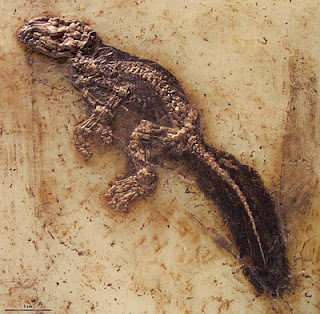
Zalamdalestes
I have reached the end of another year and that means it's time for what has become a tradition on this blog over the last eight years: a look back at some of the discoveries about fossil mammals made in 2024 that didn't make into the regular posts. As usual, this will be a quick whistle-stop tour of mammalian palaeontology, hopefully focusing on some of the more interesting findings. Like any field of science, it has not been standing still.

Large Herbivores

Woolly mammoths (Mammuthus primigenius) are among the best-known of all prehistorical mammals to the general public and, aided by the fact that some lived recently enough to be preserved in permafrost, they are also amongst the best-studied. But there is still more to learn about the details of their lives and habits. A study published this year looked at the detailed isotopic composition of a fossil mammoth that had died about 12,000 BC in Alaska, showing that she was female, and had migrated over 1000 km (600 miles) during her lifetime, having originally been born in the Yukon. The area in which she died was popular with mammoths, but also with humans - she may have died peacefully, but the presence of people where mammoths congregated may not be a coincidence.

Sunday, 12 June 2022

Miocene (Pt 33): Killer Armadillos and Far-travelling Raccoons

Lycopsis
As the Miocene epoch drew towards its conclusion, the island continent of South America drew steadily closer to its northern counterpart. The gap would not be fully bridged by land until a few million years later at the end of the following, Pliocene, epoch but, when it did, many of the peculiar mammals of the southern continent would die out, albeit in many cases it was the subsequent Ice Ages and/or the arrival of humans that truly finished them off. One group that survived the experience, and that is still around today, is that of the armadillos.

Even so, armadillos were more diverse in the Late Miocene than they are today. Probably the most distinctive were the glyptodonts, which had solid, often domed, shells without the flexible bands seen in living armadillos. As the sweltering heat of the Middle Miocene faded towards temperatures closer to those we see today, grasslands began to extend across much of the southern part of the continent, and the glyptodonts adapted to it, switching towards an even more heavily grass-based diet than before. The resulting group of what we might loosely call "advanced glyptodonts" was the one that would later briefly cross over into the north and includes the most famous examples. In addition to certain features of their shell, they were distinguished by having teeth especially suited for chewing, with the high crowns suitable for grinding up grass and other tough vegetation.

Sunday, 19 December 2021

Prehistoric Mammal Discoveries 2021

Lesmesodon, a weasel-sized hyenadont.
A new species from Early Eocene France was
 described this year
And so another year approaches its conclusion and the pandemic seemingly isn't done with us yet. I had to self-isolate after a positive test myself for a couple of weeks (no symptoms, though) but if there's one thing that doesn't interrupt, it's blogging, so everything went smoothly here. But now it's time for what's becoming a traditional look at the paleontological discoveries of the past year that didn't get covered here but are worthy of at least a brief mention.

Large Herbivores

When we think of vertebrate fossils, the first thing that pops to mind is almost certainly going to be a skeleton of some kind, or perhaps just part of one. But there are also such things as ichnofossils - fossilised remains of how an animal affected its environment that no longer include any physical part of the animal itself. Perhaps the most obvious of these are fossil trackways - footprints of long-gone animals preserved in mud or other soft material that has since turned to stone. A study published this year examined the tracks left by two species of fossil horse. One of them, a one-toed close relative of the living species inhabiting southern Canada during the Ice Ages, turned out to have been galloping at around 34 kph (21 mph), which is quite fast for its small size (perhaps it was running from something). More significantly, however, the three-toed Miocene horse Scaphohippus was using a relatively unusual gait called the "rack" typically only seen in specialised domestic breeds today. 

Sunday, 12 December 2021

Miocene (Pt 30): Horned Armadillos and Marsupial Dogs

Borhyaena
At the dawn of the Miocene, South America had been an island continent for many millions of years, allowing many strange forms of mammal to evolve that were not found elsewhere. Few of these survived the creation of the Central American land bridge, allowing more familiar creatures from the north to replace them. Some of those that did, such as the ground sloths, failed to make it through the Ice Ages, but there are exceptions still around today - descendants of ancient and peculiar animals that first originated in South America.

Among these are the armadillos, a group that was already well-established by the Early Miocene and with many living species, including one that has successfully colonised parts of North America. Miocene armadillos were perhaps more varied than those alive today, largely due to the existence of the glyptodonts. 

Sunday, 16 December 2018

Prehistoric Mammal Discoveries of 2018

Gordodon,
a new non-mammalian synapsid described this year
And so another year approaches its conclusion. As usual, I will wrap up here with a post looking at things from a slightly wider perspective. This time around, as I did last year, I am going to take a brief look at a range of scientific papers on fossil mammals that were published in 2018. There's not going to be any particular theme here beyond that, merely a list of things that caught my interest, and that were not, for various reasons, included in the blog proper. So, here we go:

Beginnings and Endings

In the modern day, it's pretty easy to tell mammals and reptiles apart. But, if we go far enough back in time, that eventually ceases to be so true. A common misunderstanding is that mammals evolved 'from' reptiles, but, in reality, mammals and reptiles are separate evolutionary lines that have lived alongside one another since long before there were dinosaurs. At least, that's true if we use the modern definition of 'reptile' since, of course, the animals that mammals really did evolve from would have looked an awful lot like reptiles if we'd been able to see them in the flesh.

Sunday, 11 August 2013

Pleistocene (Pt 10): Of Armadillos and Bison

Glyptotherium
When the continents of North and South America collided, shortly before the dawn of the Pleistocene, a range of creatures wandered across the newly formed isthmus of Panama. Most were heading south, giving us such "normal"-looking South American animals as jaguars, ocelots, and grey foxes. The ones heading north were a lot stranger, and many of them didn't do so well in the long term. These include such wonderfully weird creatures as the giant ground sloths, which managed to get as far north as modern Canada before dying out.

But they weren't alone, and not necessarily any stranger than some of their fellow immigrants. The same event that saw the arrival of the ground sloths also saw the coming of the armadillos. Today, there is only one species of armadillo in the United States, and only two outside of South America (the other gets no further north than southern Mexico). But, back during the Pleistocene, there were others, and some of them were not quite what we'd expect today.