Sunday, 5 January 2025
Miniature Mediterranean Mammoths
Sunday, 19 December 2021
Prehistoric Mammal Discoveries 2021
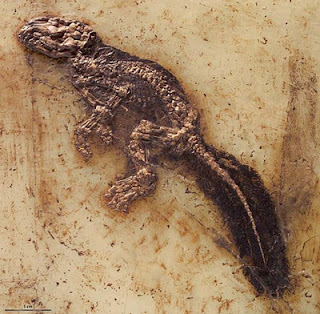
| Lesmesodon, a weasel-sized hyenadont. A new species from Early Eocene France was described this year |
Large Herbivores
When we think of vertebrate fossils, the first thing that pops to mind is almost certainly going to be a skeleton of some kind, or perhaps just part of one. But there are also such things as ichnofossils - fossilised remains of how an animal affected its environment that no longer include any physical part of the animal itself. Perhaps the most obvious of these are fossil trackways - footprints of long-gone animals preserved in mud or other soft material that has since turned to stone. A study published this year examined the tracks left by two species of fossil horse. One of them, a one-toed close relative of the living species inhabiting southern Canada during the Ice Ages, turned out to have been galloping at around 34 kph (21 mph), which is quite fast for its small size (perhaps it was running from something). More significantly, however, the three-toed Miocene horse Scaphohippus was using a relatively unusual gait called the "rack" typically only seen in specialised domestic breeds today.
Sunday, 21 March 2021
All the World's Deer: Sambar and Rusa
![]() |
| Sambar |
Nonetheless, they do seem to form a distinct branch on the deer family tree - although how many species might be in that branch, and even which ones they might be, is debated. For much of the 20th century, just two or three species were recognised, but genetic evidence gathered in the 21st century has made it more obvious that some of the island forms have been isolated from their mainland relatives for long enough to become clearly distinct.